Artificial Intelligence : SDD (Spec-Driven Development)
Software development has changed a lot lately with the introduction of new code assistants. SDD (Spec-Driven Development) comes to help controlling the software development and to create gates and governance layers that allow companies to profit from the fast-development but maintaining business requirements
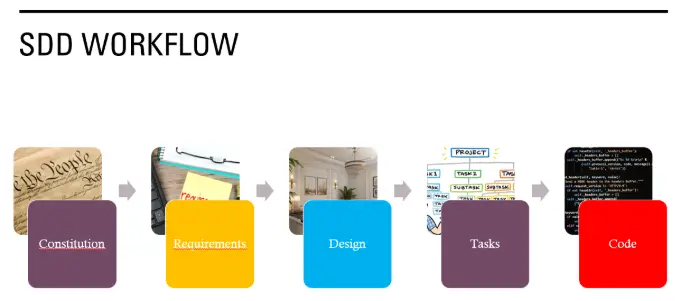
Specification-Driven Development (SDD)
Introduction
In the rapidly evolving landscape of software development, the integration of artificial intelligence (AI) has transformed traditional methodologies. Specification-Driven Development (SDD) emerges as a crucial approach, emphasizing the importance of clear, precise specifications in guiding the development process. This document explores the principles of SDD, its relevance in the AI era, and the benefits it offers to software development teams.
What is Specification-Driven Development (SDD)?
Specification-Driven Development is a software development methodology that prioritizes the creation and adherence to detailed specifications before the actual coding begins. These specifications serve as a blueprint for the development process, ensuring that all stakeholders have a shared understanding of the system's requirements and functionalities. SDD typically involves:
- Requirements Gathering**: Engaging with stakeholders to collect and document their needs and expectations.
- Specification Creation**: Developing comprehensive specifications that outline the system's behavior, performance, and constraints.
- Validation and Verification**: Ensuring that the specifications are accurate, complete, and feasible through reviews and testing.
- Implementation**: Writing code that adheres to the established specifications.
- Continuous Feedback**: Iteratively refining specifications based on user feedback and changing requirements.
The Role of AI in Software Development
The integration of AI into software development introduces new complexities and opportunities. AI systems often require vast amounts of data, sophisticated algorithms, and a deep understanding of user behavior. As a result, the specifications for AI-driven applications must account for:
- Data Requirements: Defining the types and sources of data needed for training AI models.
- Model Behavior: Specifying how the AI should behave under various conditions and inputs.
- Ethical Considerations: Addressing biases, fairness, and transparency in AI decision-making processes.
- Performance Metrics: Establishing criteria for evaluating the effectiveness and efficiency of AI models.
Benefits of SDD in the AI Era
- Clarity and Alignment: SDD fosters a shared understanding among stakeholders, reducing the risk of miscommunication and ensuring that the development team is aligned with business goals.
- Improved Quality: By focusing on specifications, teams can identify potential issues early in the development process, leading to higher-quality software and fewer defects.
- Adaptability: In the fast-paced AI landscape, requirements can change rapidly. SDD allows for easier updates to specifications, enabling teams to adapt to new insights or shifts in user needs.
- Enhanced Collaboration: SDD encourages collaboration between technical and non-technical stakeholders, facilitating discussions around complex AI concepts and ensuring that all voices are heard.
- Regulatory Compliance: As AI technologies face increasing scrutiny, SDD helps ensure that software meets legal and ethical standards by embedding compliance requirements directly into specifications.
Challenges of SDD in AI Development
While SDD offers numerous advantages, it also presents challenges, particularly in the context of AI:
- Dynamic Nature of AI: AI systems often evolve based on new data and learning, making it difficult to create static specifications that remain relevant throughout the development lifecycle.
- Complexity of AI Models: The intricate nature of AI algorithms can lead to specifications that are difficult to understand and implement, requiring a balance between detail and clarity.
- Stakeholder Engagement: Engaging non-technical stakeholders in the specification process can be challenging, especially when discussing complex AI concepts.
Conclusion
Specification-Driven Development is a powerful approach for managing the complexities of software development in the AI era. By emphasizing clear, detailed specifications, SDD helps teams navigate the challenges posed by AI technologies while ensuring alignment with stakeholder expectations. As the field of AI continues to evolve, adopting SDD principles will be essential for delivering high-quality, ethical, and effective software solutions. Embracing this methodology can lead to more successful projects, satisfied users, and a more robust software development process overall.